
Foundation Crack Repair
A distinct leaking wall line calls for sealing along the crack itself.
Did the puddle begin beneath a pipe, below a window, or out in the floor? Minneapolis PureSeal starts basement leak repair at the first wet mark. We trace the entry point and choose sealing or drainage work that follows the water.
Call (612) 457-0860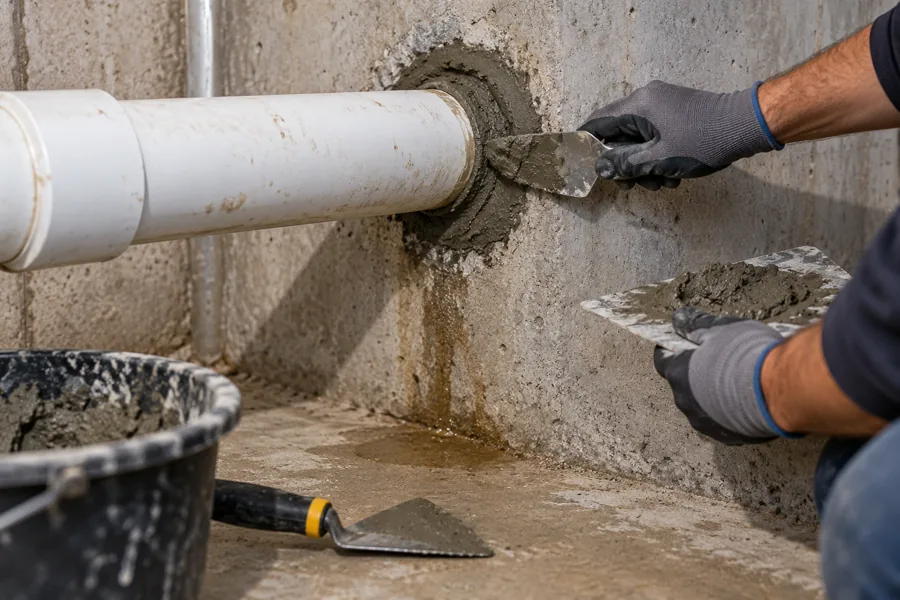
The largest puddle is not always closest to the opening. Water runs along the slab, behind stored boxes, or through hidden wall spaces. We look above the stain and follow nearby joints and penetrations. The table gives starting clues without treating a puddle as a complete diagnosis.
| Where You See Water | Likely Source | Typical Fix |
|---|---|---|
| Base of wall/cove joint | Water pressure beneath or beside the footing | Perimeter collection connected to a working sump |
| Around a pipe | A gap at the pipe penetration | Clean and seal the opening around the pipe |
| Below a window | A flooded well or leaking window perimeter | Restore well drainage and seal the actual opening |
| Center of the floor | Water beneath the slab or a separate plumbing leak | Trace the source before choosing drainage or a plumbing referral |
| A wall crack | Water following an opening through concrete or mortar | Prepare and seal the leaking path |
| After the pump runs | Returning discharge or leakage from connected pipework | Repair the pipe, valve, or outside outlet route |
A pipe penetration leak sometimes hides behind foam or an earlier surface patch. We remove loose material around the opening and inspect the pipe edge. Water following the outside of a pipe needs a seal around that penetration. Water inside a damaged supply pipe belongs to a separate plumbing repair.
In Minneapolis, the late March–April thaw brings meltwater onto ground that remains frozen below. That trapped water collects beside foundations before the deeper soil opens. A dry basement during summer does not rule out this spring pattern. We ask when the first puddle appeared and how long it kept growing.
Summer storms send roof runoff and yard water toward different openings. A downspout ending beside a window well adds water directly where the frame sits. During wet basement repair, we compare those outside routes with the marks indoors. That links the repair to the weather that actually causes the leak.
If the floor becomes wet without rain or thaw, tell us what else was running. A laundry cycle, drain backup, or leaking supply pipe calls for another trade. We separate that evidence from groundwater before proposing a wall seal. Photos of the first wet spot help keep those jobs distinct.
We start at the highest wet mark and work toward nearby joints or openings. Fresh water tracks matter more than an old ring left after drying.
Loose patching and failed sealant hide gaps around cracks and pipes. We clean the work area without covering clues farther along the wall.
A concrete crack needs different materials from a pipe gap or worn mortar joint. We name the opening and material in the written plan.
After the repair, we inspect the nearby floor edge and discharge connections. A sealed spot should not leave another active route unexplained.
Basement seepage repair also needs a look beneath the visible stain. Water coming through basement floor openings points us toward pressure below the slab. A patch at the surface will not collect that groundwater. We explain when drainage belongs alongside sealing instead of selling the same patch repeatedly.
The number of entry points and the wall material shape the work. An exposed pipe gap takes different preparation from a crack behind finished drywall. We also account for old coatings, nearby utilities, and cleanup. The written price lists the openings being treated and the materials we will use.
Tell us which repairs have already been tried and where water returned. That history helps us avoid repeating a failed surface patch. Drainage work gets described separately when the leak starts beneath the floor. Call with the timing and photos so we discuss the right starting point.
Water travels along joints, hidden wall spaces, and sloped floors before forming a puddle. We look above and beside the wet area for the first trail. Pictures taken as water appears help separate that trail from later spreading. Leave old stains visible until the visit so the route remains easier to follow.
Hold off on another surface patch until the opening has been traced. Fresh sealant hides the edge and sometimes redirects water toward the next gap. We ask for photos of the unpatched leak and nearby wall. Keep belongings away from that area without entering standing water or disturbing electrical equipment nearby.
Water sometimes follows the outside of a pipe through its wall opening. The pipe itself stays dry beyond the penetration while the surrounding concrete darkens. We inspect the gap, earlier patching, and the outside wall connection. A cracked supply pipe or leaking fitting needs plumbing work instead of sealing around the penetration.
Write down the weather, when the puddle started, and which appliances were running. Thaw seepage follows melting snow and sometimes continues after the surface looks dry. Water tied to one appliance cycle points us toward another source. We compare that timing with the wall marks before recommending sealing or a plumbing referral.
Wet seams along several walls point toward interior drain tile rather than isolated patches. Water spilling from a full basin needs sump pump service first. We trace those routes before choosing another bead of sealant. The repair follows the source instead of only the place water collected.
We trace leaks in Longfellow, Powderhorn, Nokomis, Northeast, and the communities below. Describe the first wet spot rather than only the largest puddle. A photo showing nearby pipes or windows gives that mark context. The weather and timing help us plan where to start looking.
Tell us where the water starts and which weather brings it back. We will explain what to photograph and what access the visit needs. The written repair plan connects the entry point to the work and price.
Minneapolis PureSeal
Minneapolis and surrounding area
contact@waterproofingminneapolis.comMonday through Friday, 8:00 AM to 5:00 PM
Emergency calls: available 24/7