Minneapolis and surrounding areaEmergency calls: available 24/7

Foundation Crack Repair in Minneapolis

That dark line beneath a basement window deserves a closer look when rain turns it into a wet streak. For foundation crack repair in Minneapolis, we trace the wet line back through the wall. At the opening, we clean the surface, choose the resin, and explain any drainage work needed alongside sealing.

Call (612) 457-0860
Monday through Friday, 8:00 AM to 5:00 PMEmergency calls: available 24/7
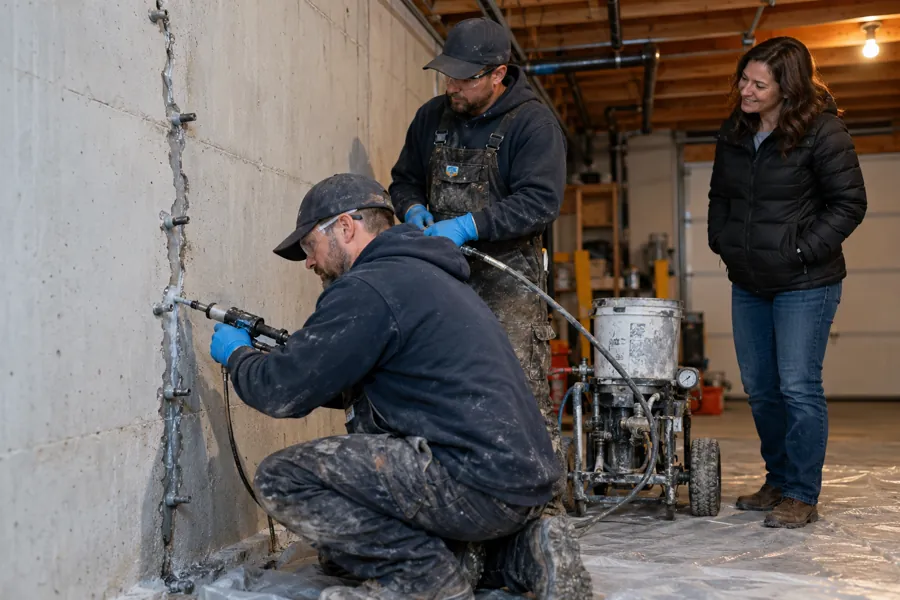
A technician seals a vertical crack in a poured basement wall while others watch from behind.

Foundation Crack Repair Starts With the Crack Pattern

Start with the crack’s direction, the wall material, and the first wet spot. Along the crack, we follow the line past old patches and look for offsets between its sides. A wall crack and a floor crack lead us toward different repairs. The table explains what we look for before choosing injection.

Crack TypeWhat It Usually MeansNext Step
Hairline verticalA narrow opening, including shrinkage cracks; width alone does not show the causeCheck moisture, history, and whether the opening changes
Wider vertical in a poured wallA more open leak path that needs closer examinationWe inspect the opening and wall before choosing injection
Stair-step in blockA path following mortar joints; possible movement or joint wearWe inspect the joints and refer movement concerns for structural review
HorizontalPossible pressure or movement, especially with bowingA horizontal crack or bowing needs a structural evaluation first
Floor crackAn opening in the slab, separate from a wall injection taskCheck groundwater, floor condition, and drainage needs

If a crack seems to be growing, take a dated photo with a tape measure beside it and send it when you call.

Polyurethane or Epoxy: Match the Repair Purpose

Polyurethane for a water-sealing task

Polyurethane resin foams when it meets water and expands into the crack. Along the visible line, we inject resin through the spaced ports. The resin fills the path through the full wall thickness. It is our go-to material for active leaks through poured concrete walls.

Epoxy where a bonded repair is wanted

Epoxy bonds the two sides of a crack back together. For dry, stable cracks in poured walls, we use epoxy to bond the crack sides. Before injecting, we clean the opening, set injection ports, and seal the surface. The wall material guides our resin choice instead of another surface patch.

Block walls and mortar joints need a different approach from solid poured concrete. Water travels along joints or inside hollow block cores before reaching the floor. Those wet paths guide us as we explain where mortar repair or drainage belongs. Foundation crack sealing works when the material reaches the opening that actually leaks.

Winter Leak Sealing From Inside

Water freezing inside a crack expands and pushes its sides apart. Repeated freeze-thaw weather widens openings and gives meltwater a path inside. Along that line, we look for fresh wet streaks and loose patching. Tell us which winter weather first brought water into the room.

Injection happens from inside the basement, so frozen ground doesn't stop the work. Inside the basement, we expose the crack, clean the surface, and install the injection ports. The basement and wall still need the temperatures listed for the resin. Before a winter repair, we discuss heat and access to the wall.

In Minneapolis, late-winter melt reveals leaks that stayed hidden through dry months. We trace the first wet mark rather than sealing every stain below it. Water at several floor edges sends us toward the perimeter drain. Basement crack repair handles a leaking wall opening, not water rising beneath the slab.

Horizontal cracks or bowing need a structural review before we start leak sealing. We explain that step separately from polyurethane or epoxy injection. Filling a crack does not stop a wall from moving. Tell us about new offsets or a changing wall when you call.

Typical Crack Injection Cost

ServiceTypical RangeWhat Changes the Price
Foundation crack injection$400–$1,000 per crackCrack length, wall type, access

Our written price lists crack length, wall preparation, injection method, and cleanup. We explain where we will remove paint or old patching. Tell us about drywall hiding either end of the line. We agree on wall access before bringing resin and injection equipment inside.

If a patched crack leaks again, photograph where the water starts. We follow that mark and remove loose material hiding the opening. Foundation leak repair starts with finding the water path behind the patch. We explain whether reinjection, mortar work, or drainage will fix the returning leak.

Call (612) 457-0860

Questions About Sealing a Wall Crack

Does the width of a crack tell me which injection material to use?

We choose the resin from the wall material, moisture, and movement history together. A wet crack through poured concrete calls for different work than a dry mortar joint. We clean the visible line and look for gaps behind earlier patching. Width helps us plan injection ports, but it does not explain why the wall opened.

Does paint need to come off before a crack is sealed?

We remove paint and loose patching along the crack before setting injection ports. Resin needs a clean entry point, and the surface seal needs bare wall to grip. We explain which strip of wall we will expose before work begins. Move boxes away and tell us about framing or drywall covering the crack.

How do I record a crack that seems to be changing?

Take pictures from the same position so changes remain easy to compare. Place a tape measure beside the opening and record the date. Tell us about new offsets, sticking openings, or a wall that looks bowed. We pause leak sealing when those signs point to movement and explain the next step for structural review.

Is a leaking mortar joint treated like a poured-concrete crack?

We repair leaking mortar joints differently from cracks through poured concrete walls. Water follows the spaces between brick, stone, or block instead of one solid opening. We trace the wet joints and look for water inside hollow block cores. That tells us where mortar repair or wall drainage belongs before we choose materials.

What happens if the wall is dry on the inspection day?

We still read the crack, water stains, and old patches on a dry day. Photos from the last leak show where the wet streak started. Tell us which weather brings it back and how long the wall stays wet. We also check the resin’s moisture and temperature requirements before scheduling the injection work.

When Crack Sealing Isn’t the Right Fix

Water spreading along the floor-wall seam points us toward interior drain tile. We use basement wall waterproofing for moisture moving through broader masonry surfaces. Neither job replaces structural review when a wall shows movement. We explain which water path each repair handles before you choose the work.

Areas Served

We seal leaking cracks in Minneapolis and the communities listed below. Tell us whether your wall is poured concrete, block, brick, or stone. Send a photo showing the whole line and nearby floor edge. We use those details to discuss access and the next step for your basement.

Return to the home page for all services and areas ↗

Start With the Crack You Can See

Tell us where the line runs and which weather brings water through it. We will explain the next step for sealing or tracing that leak. We put the agreed repair and price in writing before work starts.

Minneapolis PureSeal
Minneapolis and surrounding area

Call (612) 457-0860

Monday through Friday, 8:00 AM to 5:00 PM
Emergency calls: available 24/7

Call (612) 457-0860