An old pipe leaves a wet ring
Water tracks around a penetration through the block wall. Older rambler foundations retain joints and openings around those pipe routes. We remove loose patching and seal the gap instead of coating the surrounding wall.
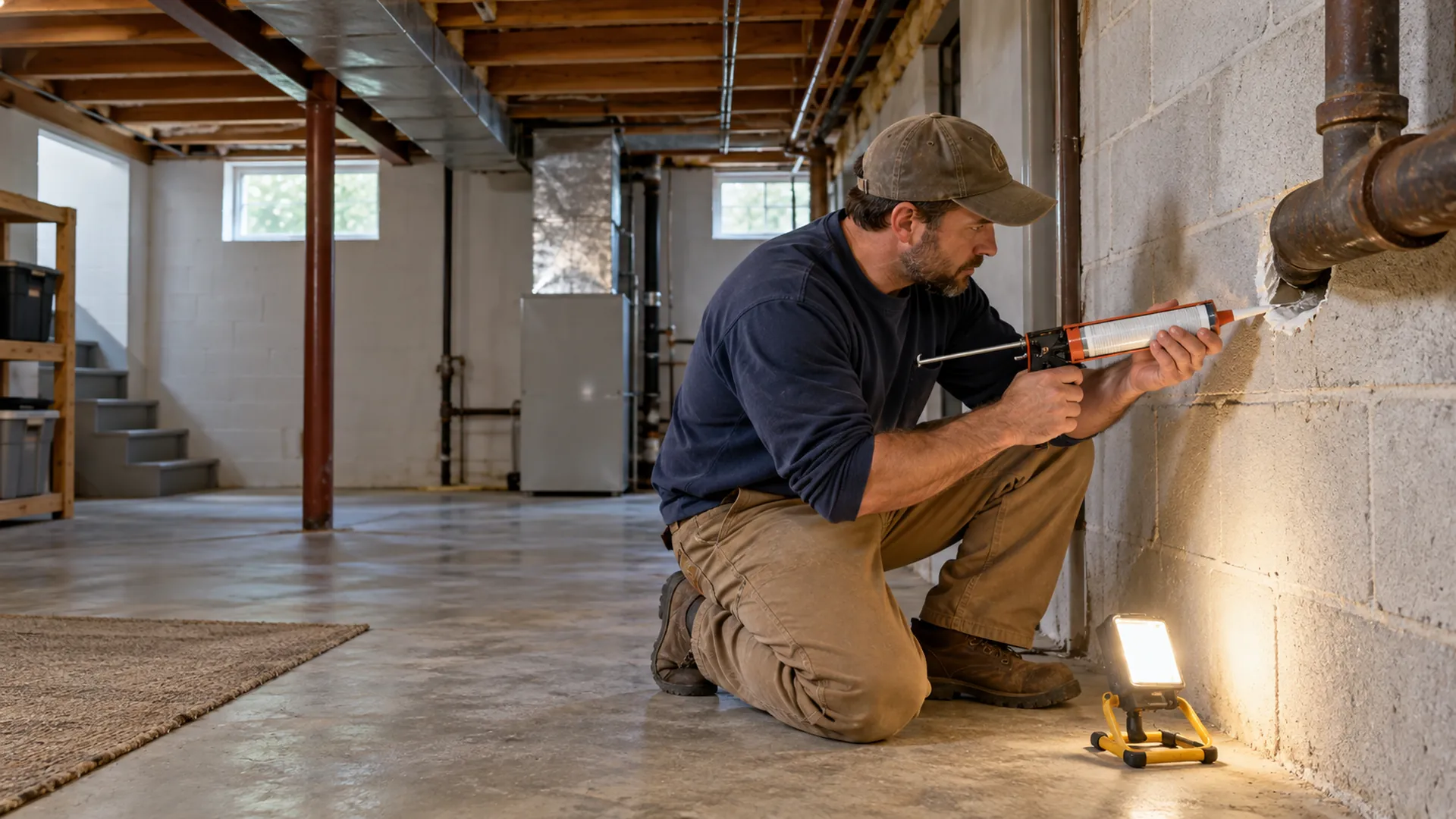
A dark ring forms around an old pipe where it passes through the basement block wall. Richfield’s postwar ramblers bring aging joints and the floor-wall seam into the same leak call. We seal the actual opening and connect any separate seepage to collection.
Call (612) 457-0860Water tracks around a penetration through the block wall. Older rambler foundations retain joints and openings around those pipe routes. We remove loose patching and seal the gap instead of coating the surrounding wall.
A wet mortar course returns below paint after the floor dries. Aging block walls carry moisture through joints and internal spaces. The repair gives that water a sealing or lower collection route.
A downspout releases water onto ground that stays beside the house. Mostly flat yards leave runoff without much fall away from the foundation. We plan a usable outside destination before adding another buried drain.
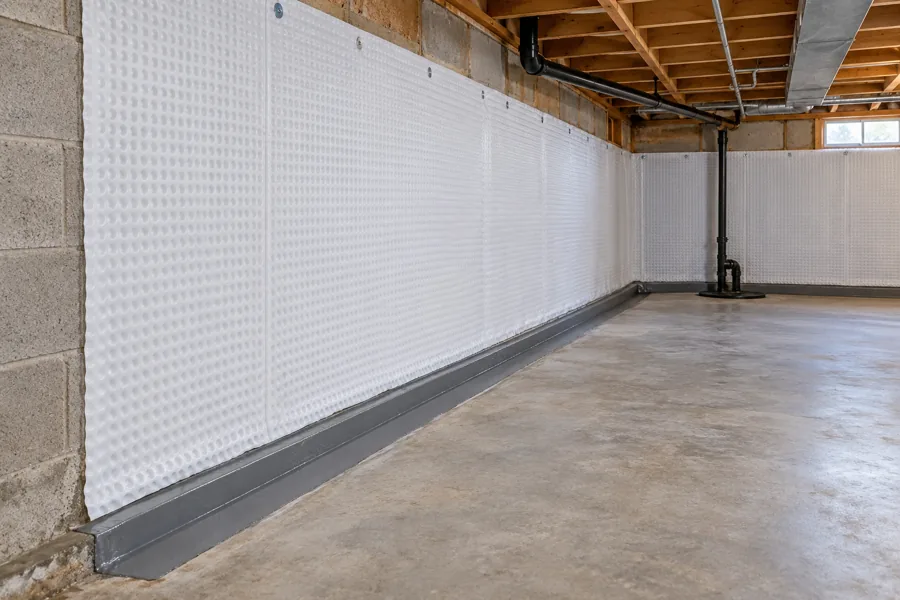
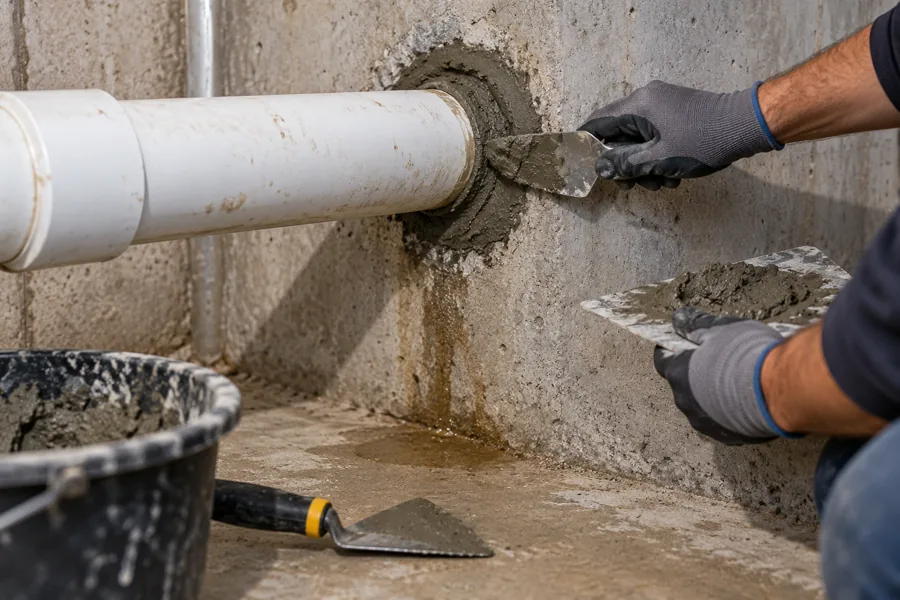
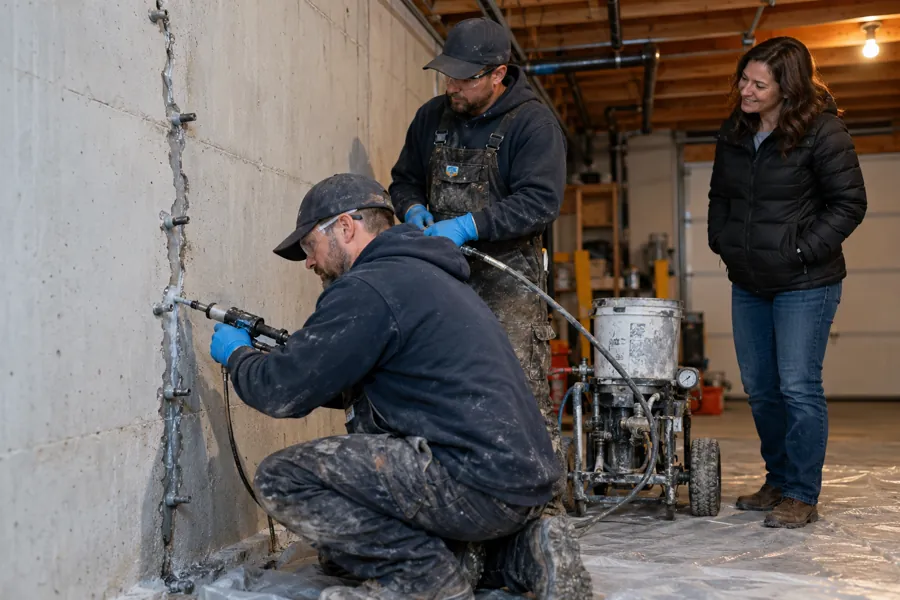
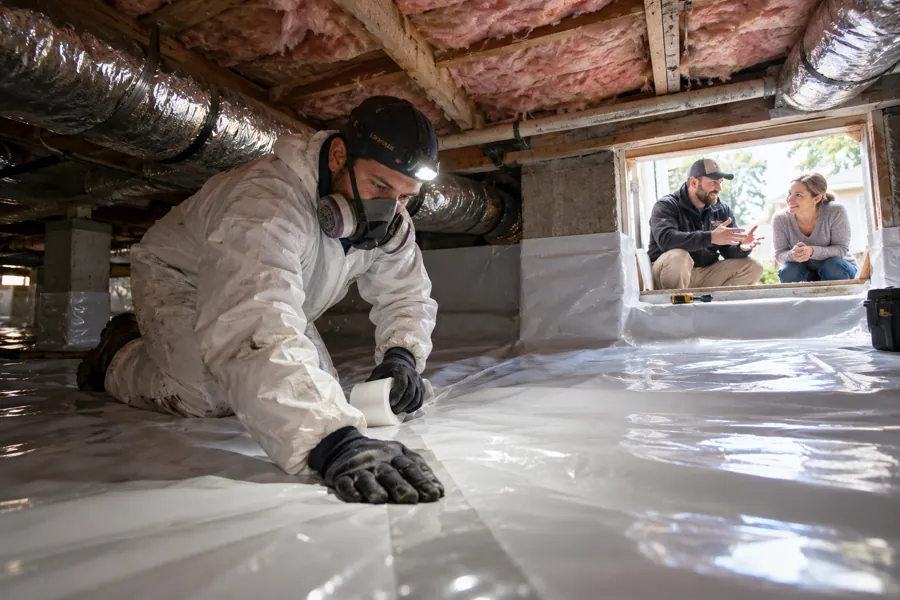
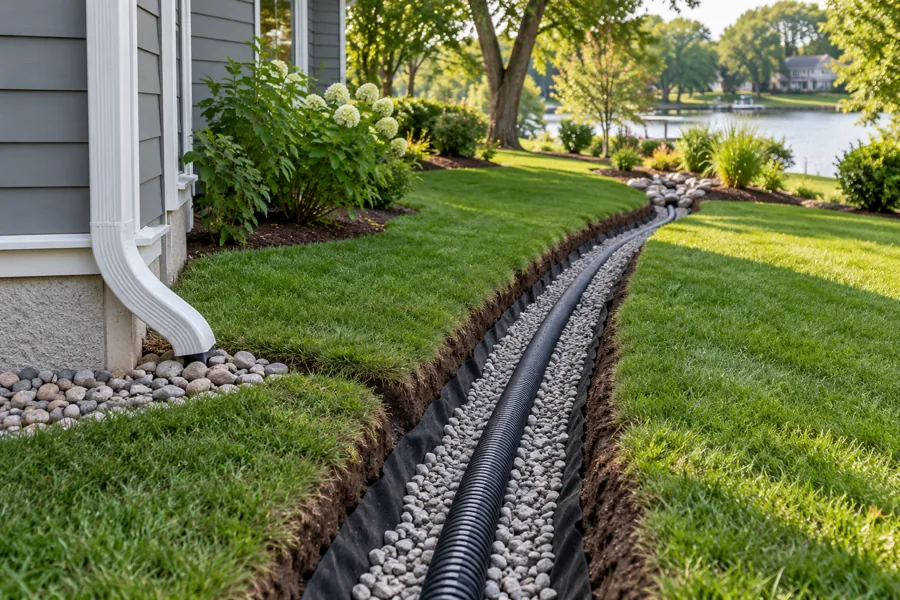
Postwar ramblers here were built for returning veterans in the late 1940s and 1950s. Block walls and old penetrations remain behind later paint or finished panels. Wood Lake sits within the mostly flat local landscape. We compare the leaking opening with the floor edge and the runoff route beside that wall.
With an aging lower wall, wet basement repair in Richfield needs the damp joint exposed before more paint goes on. A pipe ring takes different preparation from a long wet cove seam. We explain those openings separately before pricing materials or collection pipe. That makes the next patch part of a repair instead of another hidden layer.
Loose sealant hides the wall opening until it is removed. We clean the edge and choose material for the pipe and surrounding masonry. Block wall sealing treats leaking masonry while collection drains water held inside hollow cores. Pipe leak repair starts by separating a leaking pipe from groundwater entering around its wall opening. Cove joint seepage needs a collection route along the seam between the wall and slab.
For a defined wall opening, foundation crack repair in Richfield follows the actual concrete or mortar path. We show how the wet course reaches collection where drainage is needed. A bow or horizontal crack goes to structural review before sealing starts.
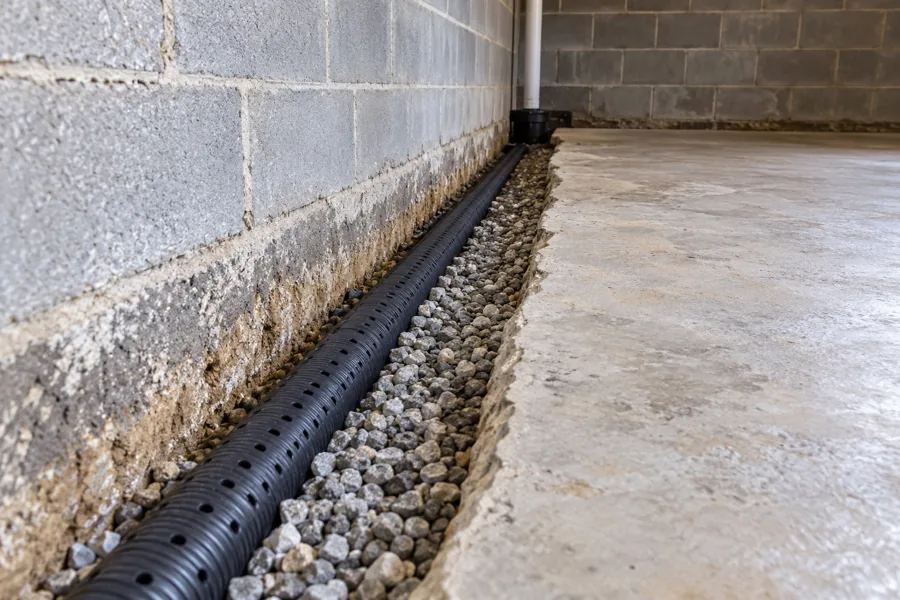
Water entering along the slab edge needs a collector connected to a working sump. We choose the wet wall sections before opening a narrow strip of floor. The wall drainage edge gets fitted before the concrete patch closes that strip. Finished surfaces are restored after the collection connection has been explained and installed.
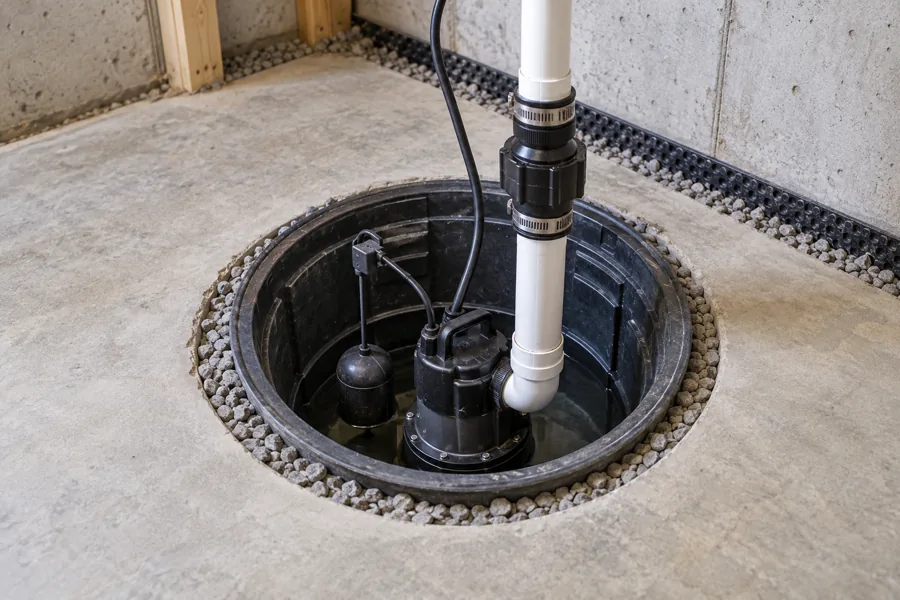
A full basin calls for sump pump repair in Richfield before the new drain depends on it. The outside pipe must reach a destination that does not return flow across flat ground. We run the controls and trace that discharge beyond its end. Groundwater leaves through the yard or another approved outlet, outside the sanitary sewer.
During winter, leave the old pipe penetration visible so a fresh wet ring is not hidden behind storage.
At late March–April thaw, photograph the lower block course before water spreads along the rambler’s floor edge.
After summer rain, check where the downspout releases water onto the flat ground beside the wet wall.
In fall, move loose boxes away from mortar joints so returning dampness stays visible before the room is refinished.
| Service | Typical Range | What Changes the Price |
|---|---|---|
| Foundation crack injection | $400–$1,000 per crack | Crack length, wall type, access |
| Interior drain tile | $70–$120 per linear foot | Floor removal, finished walls, number of walls |
| Sump pump installation | $1,200–$2,500 | New basin vs. replacement, discharge line work |
| Exterior excavation waterproofing | $15,000–$35,000+ | Depth, landscaping, decks or driveways in the way |
Age alone does not turn a leaking block joint into a foundation replacement job. We inspect the wet path and explain sealing, mortar work, or lower collection that fits it. Signs of movement need separate structural review before that leak repair. The written plan names the water-control task without offering structural stabilization behind it.
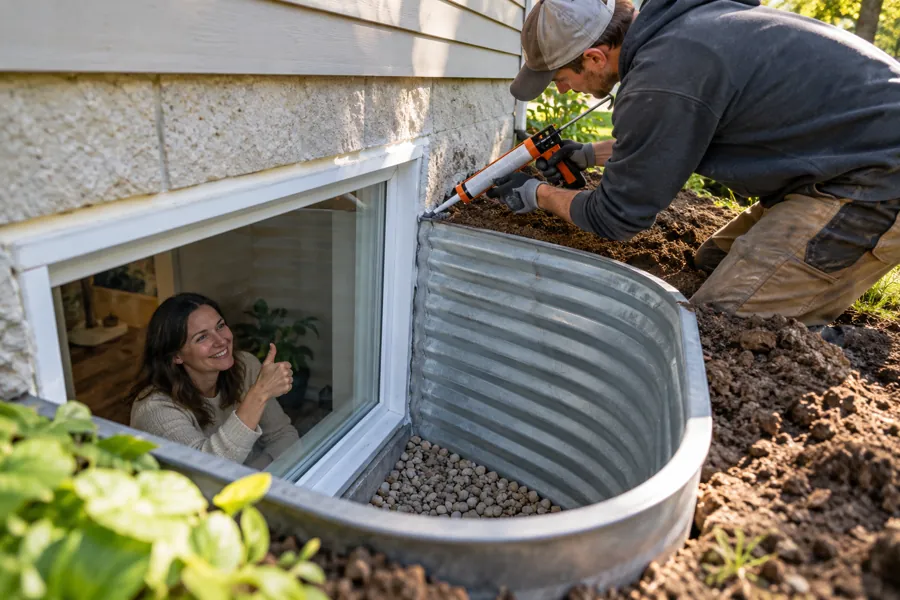
The gap needs to be exposed after loose sealant or patching is removed. We inspect the pipe edge and surrounding block before choosing the sealing material. Water dripping from a damaged pipe belongs to a separate plumbing repair. A wet ring outside the penetration needs its own seal through the masonry opening around it.
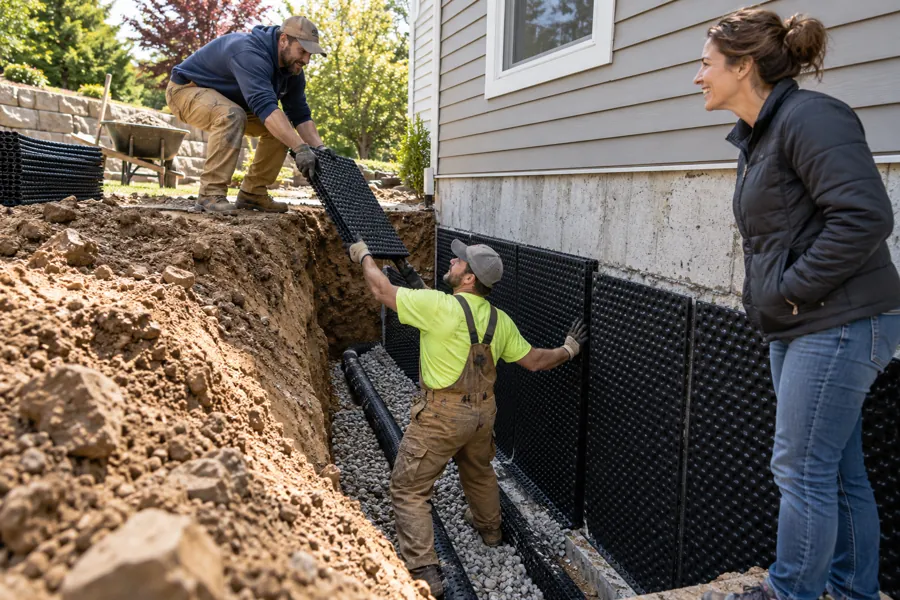
A drain or extension needs a usable destination beyond the wet strip. We follow the ground levels before proposing a buried pipe that stops beside the same foundation. A pump outlet also needs that exit rather than feeding water back toward the basin. The repair plan connects indoor collection with the outside route that receives it.
The wall’s moisture route needs a repair before fresh panels hide its lower joints. We explain how sealing or a membrane connects to collection at the floor edge. Pump access must remain reachable after the room is finished. The price separates wall preparation, water-control materials, and the surfaces being restored around that work.
Bluff-side runoff and wet cove joints affect older ramblers and their discharge routes.
Finished rooms hide aging foundation leaks until water reaches the floor edge.
Broader block moisture needs a wall treatment tied to the receiving collection edge.
Perimeter pipe brings water from several wet seams toward the existing sump.
A pipe gap receives sealing distinct from the wall and floor collection system.
Tell us whether the water begins around a pipe or along the lower wall. We will discuss the opening and any collection problem before another patch goes on.
Minneapolis PureSeal
Minneapolis and surrounding area
contact@waterproofingminneapolis.comMonday through Friday, 8:00 AM to 5:00 PM
Emergency calls: available 24/7